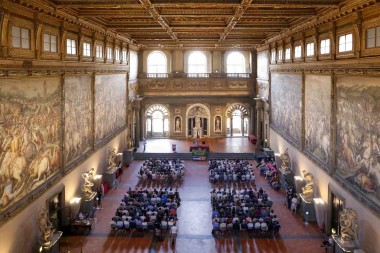
More than 75 years after the first STATPHYS conference was held in Florence in 1949, the world’s leading statistical physicists returned to the city where the series began.
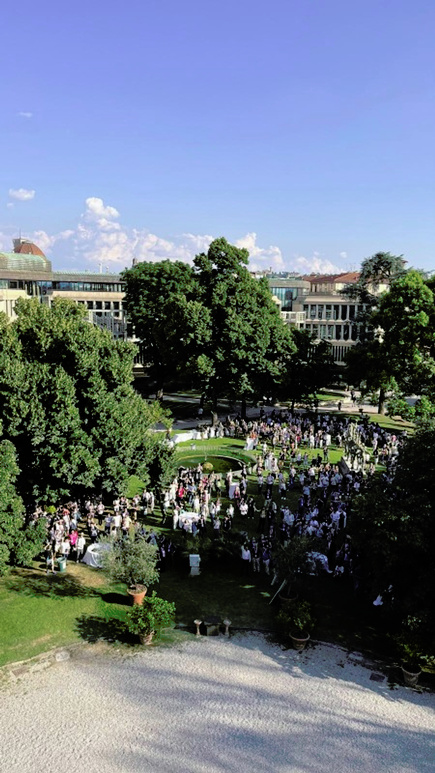
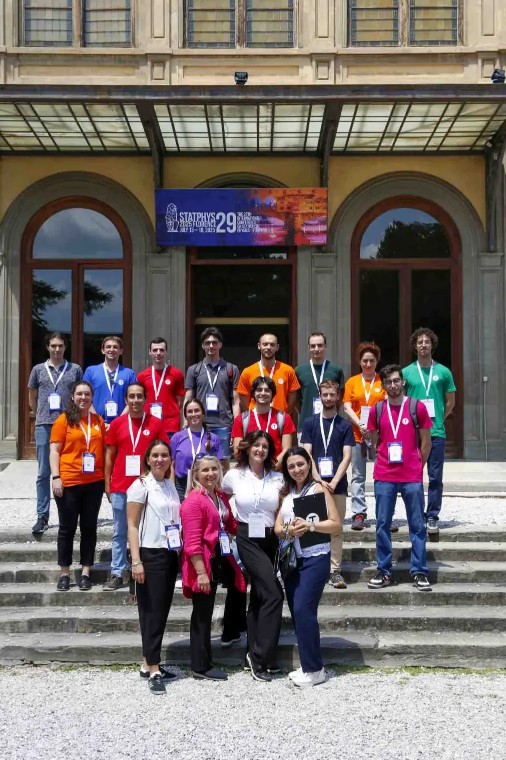
StatPhys29 – the 29th International Conference on Statistical Physics – brought together 1,583 scientists from 59 countries, reaffirming the event’s status as the premier global gathering for the field. Hosted at Palazzo degli Affari and Palazzo dei Congressi, the congress explored cutting-edge developments in statistical physics and its rapidly expanding influence across disciplines including complex systems, biological physics, machine learning, climate science, soft matter and quantum fluids.
Organised under the auspices of the International Union of Pure and Applied Physics (IUPAP) and co-organised by the Italian Society of Statistical Physics (SIFS), the event featured 9 plenary lectures, 59 invited speakers and 388 oral presentations, alongside satellite symposia, poster sessions and public engagement initiatives.
The scientific programme featured major moments of international recognition, including the opening lecture by Nobel Laureate Giorgio Parisi. The prestigious Boltzmann Medal, one of the highest honours in statistical physics, was awarded to Mehran Kardar and Yoshiki Kuramoto, while the IUPAP Young Scientist Prizes recognised emerging leaders shaping the future of the field.
Beyond the scientific programme, StatPhys29 demonstrated the wider impact of international congresses – fostering global collaboration, engaging local communities and reinforcing Florence’s role as a leading destination for scientific exchange.
Challenges
Delivering a large-scale international scientific congress while maintaining financial sustainability and operational efficiency required careful planning and innovation.
Budget optimisation while maintaining quality: Midway through the planning process, the organising team undertook a detailed budget review to ensure financial sustainability without compromising the scientific programme. Meeting rooms were strategically allocated according to projected session attendance, optimising venue capacity and resource allocation.
Managing a complex scientific programme: With hundreds of presentations scheduled across multiple sessions, efficient programme delivery was essential. A virtual slide centre was introduced, allowing speakers to upload presentations ahead of the conference. This reduced on-site queues, streamlined session transitions and minimised technical staffing requirements.
Sustainability and resource efficiency: Delegates were encouraged to print their badges at home, reducing the need for on-site printing and registration staffing. Recycled-paper badge holders, printed with essential conference information, further supported sustainability goals while lowering operational costs.
Solutions
Triumph Italy worked closely with academic leaders, local institutions and destination partners to deliver a coordinated international congress that balanced scientific excellence with operational efficiency.
Key delivery strategies included:
- Strategic collaboration with the City of Florence, Firenze Fiera and the Destination Florence Foundation to secure and deliver the event.
- Implementation of digital tools, including the virtual slide centre, to streamline programme management.
- Adoption of sustainable operational practices, reducing printing and material waste.
- Careful venue and programme planning to support 1,800+ abstract submissions and nearly 400 oral presentations while maintaining a smooth and engaging delegate experience.
Outcomes
StatPhys29 delivered significant scientific, social and economic impact.
The conference welcomed 1,583 delegates from 59 countries, with approximately 75% travelling internationally, reinforcing Florence’s role as a global hub for scientific collaboration.
The event generated meaningful economic benefits for the destination, with average delegate spending estimated between €1,200 and €1,500, contributing to hotel occupancy, restaurant activity and cultural tourism across the city.
The conference also created a lasting legacy through community engagement and capacity-building initiatives:
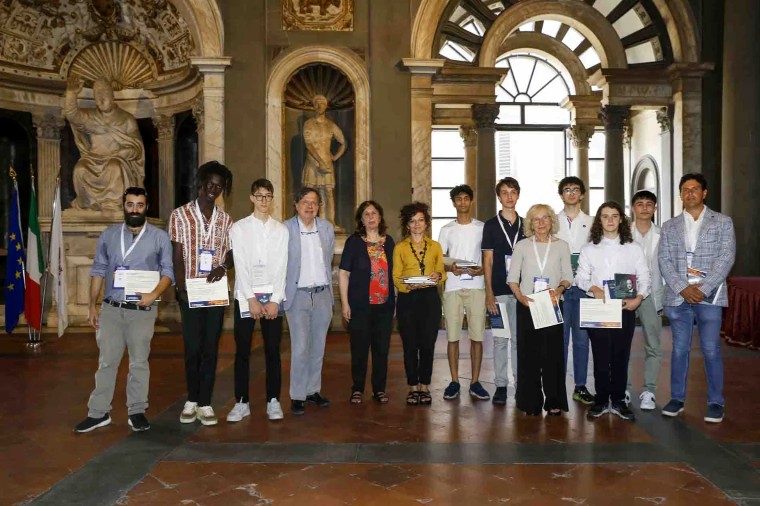
- Student outreach programmes invited local high-school students and teachers to attend lectures on global challenges such as climate change, migration and artificial intelligence, with student projects recognised through the School Project Award initiative.
- Public lectures and panel discussions promoted scientific awareness and human rights, including sessions on climate science and academic freedom open to the wider community.
- Satellite meetings in developing regions, including Kigali, Rwanda, strengthened international collaboration and supported emerging scientific communities.
- A dedicated €22,000 participation fund enabled researchers from developing countries to attend, while poster awards supported early-career researchers with academic publishing resources.
Together, these initiatives ensured that StatPhys29 delivered not only world-class scientific exchange, but also meaningful educational, societal and international impact.
StatPhys29: The World’s Leading Statistical Physicists Return to Florence
StatPhys29: The World’s Leading Statistical Physicists Return to Florence
StatPhys29: The World’s Leading Statistical Physicists Return to Florence
StatPhys29: The World’s Leading Statistical Physicists Return to Florence
StatPhys29: The World’s Leading Statistical Physicists Return to Florence
StatPhys29: The World’s Leading Statistical Physicists Return to Florence